Discover San Gimignano in Tuscany: A Journey Through History, Artistic Heritage and Iconic Film Locations
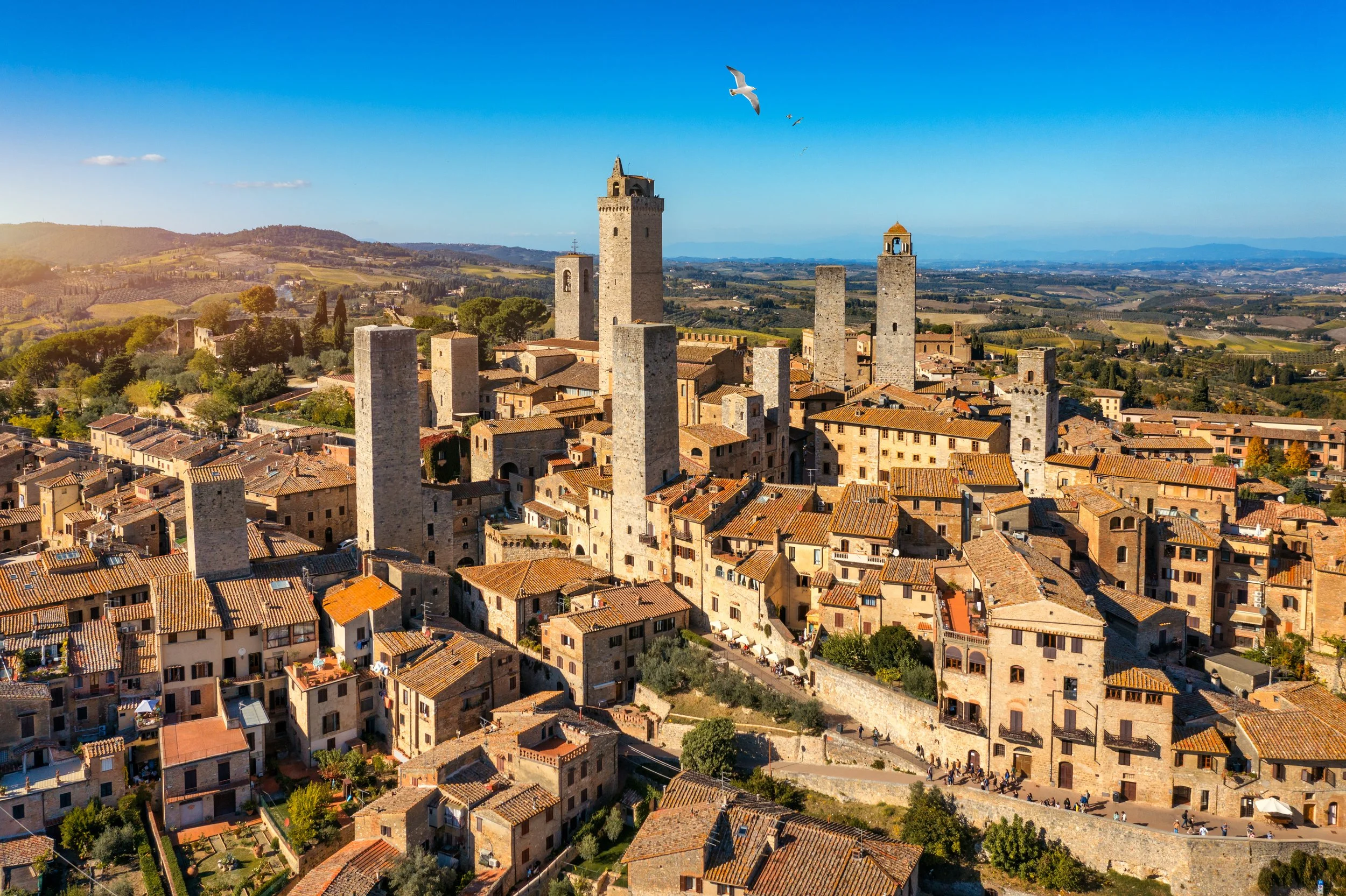
Aerial View of San Gimignano, Tuscany
I.
On Tuscan Hills
Wind, lightning and rain had slowed our drive, but twenty minutes and a few miles later, the village appeared, perched atop a sunny hill. The Tuscan hills, still glistening from the summer storm, had already begun to dry and sunlight illuminated the stone façades. The saying that the journey is part of the destination feels particularly true in the lyrical landscape of Val d’Elsa, framed by cypress-lined roads and the quiet pattern of the vineyard rows.
Just a short distance from Siena, the village of San Gimignano feels suspended in time. Its medieval-stone towers make it recognizable from afar. It offers an admirable balance between the delight of historical discovery and unparalleled visual splendor. The entire borgo is the result of meticulous preservation of its 13th- and 14th-century character: its formidable walls enclose narrow-cobbled streets, original weathered-stone façades, as well as ancient towers and churches that have been perfectly maintained. It’s no surprise that it earned a place on the UNESCO World Heritage List.
With the sound of the bells setting the pace of the village, its streets fill with art-minded visitors moving through the ancient walls with a quiet sense of respect and curiosity. And the village responds in kind, offering easily-navigable historical routes, thoughtfully curated culinary experiences and breathtaking panoramic views over the surrounding golden fields. It may seem like a destination for just a day or two. Yet this village offers such a profound sense of intimacy that we chose it as our place of retreat for a week.
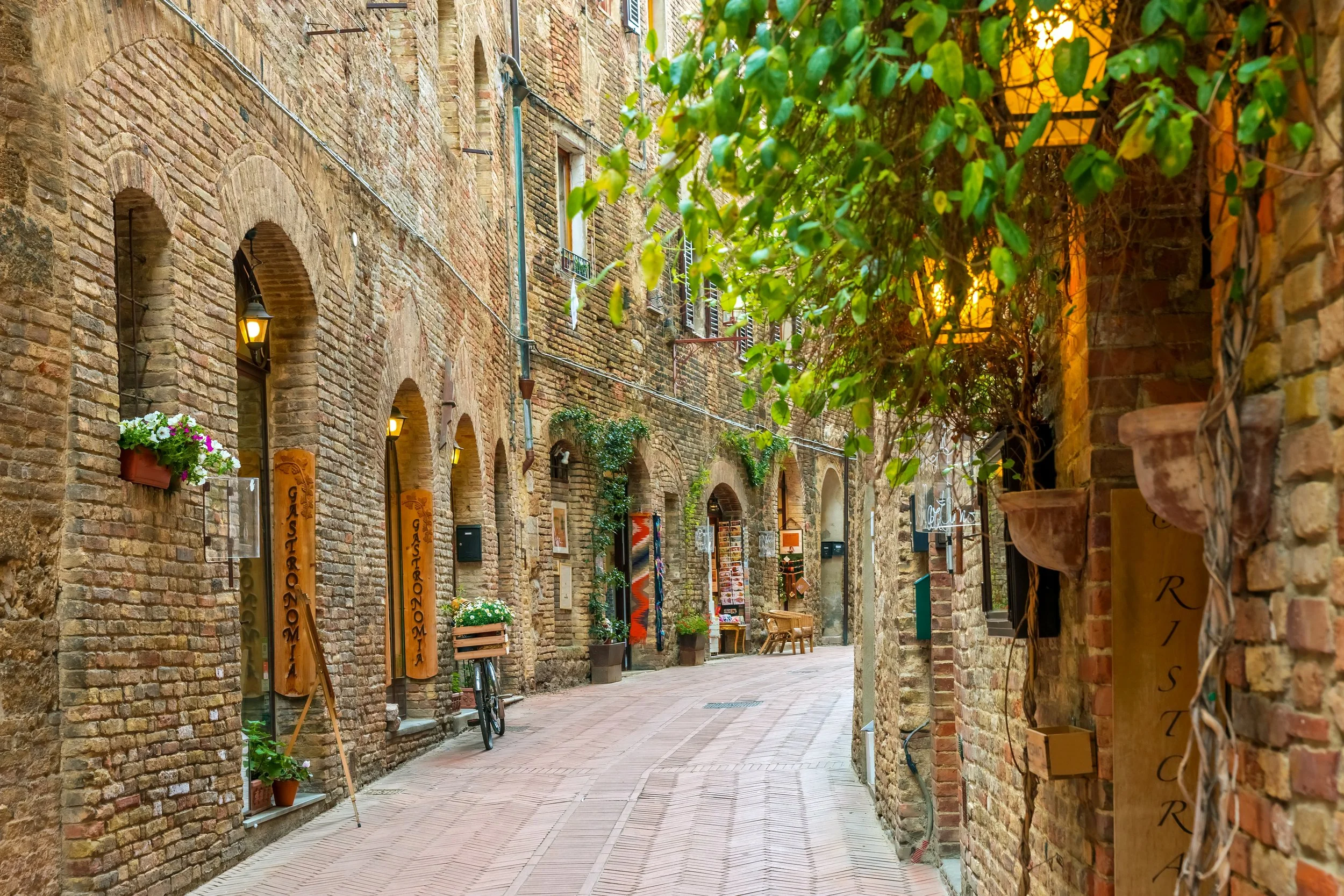
Alleys of San Gimignano’s Historic Center
II.
Historical and artistic Heritage
The famous towers once rose as symbols of power for the city’s most prominent families, while also serving defensive purposes. There were many more in the past, but today 14 still rise above the village walls, giving the place its unmistakable silhouette. Reaching the top of the Torregrossa — all 54 metres of stone — is worth every step. Once you’re up there on the windy summit, the view over the town and the Val d’Elsa opens up in full.
The Civic Museum ticket grants access to the city’s main sites. The monumental Duomo of San Gimignano houses the Renaissance jewel of the Chapel of Santa Fina, where frescoes movingly capture the Saint’s grace and devotion. Just a few steps away, the Museum of Sacred Art preserves a spiritual heritage in its original sculptures, textiles, and bas-reliefs. The Monastery of Santa Chiara is just a ten-minute stroll through the city’s evocative medieval streets. Here, the Spezieria di Santa Fina recreates the 13th-century herbal pharmacy but also houses a Museum of Modern and Contemporary Art — whose quiet appearance is deceiving.

The renowned fresco of Santa Fina in the Duomo of San Gimignano, depicting the young saint on her deathbed surrounded by devoted figures.
The museum itinerary is a dive into the intimate and spiritual life of the medieval village. It is covered in a timeless patina and it perfectly match the delicate balance of restoration and authenticity. It can be also be felt while walking along the city walls, where narrow pathways wind through the tightly-knit houses, refined artisan workshop (such as the handsome sculptures of Franco Balducci) alongside numerous contemporary art galleries. The village’s life is enlivened by a constant flourish of artistic events, appearing here and there. Chasing the music through the alleys, we stumbled upon a touching performance of Tosca at sunset.
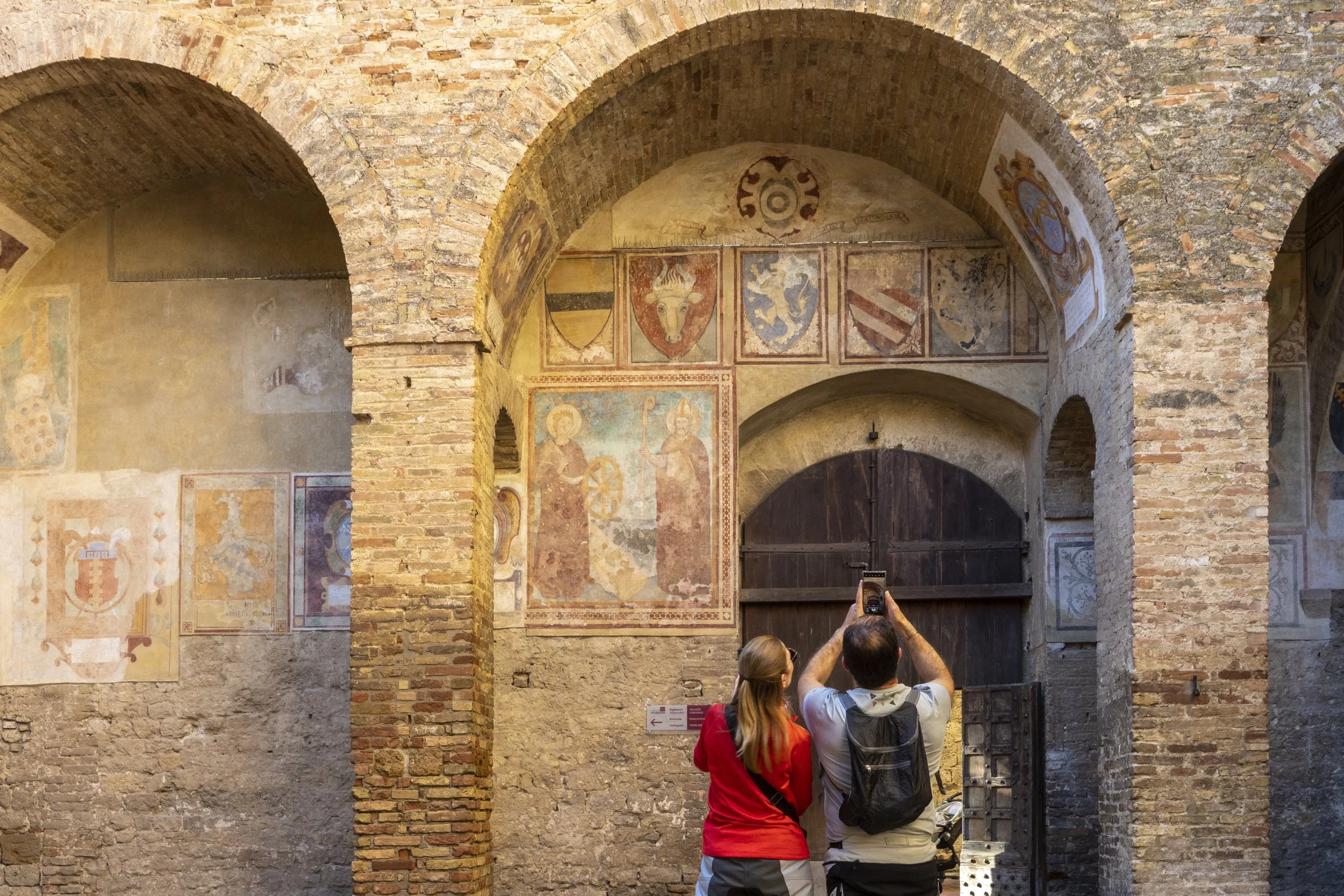
Visitors capturing the medieval stone walls of San Gimignano during a stroll through the historic borgo.
III.
Culinary Artistry within Ancient Walls
During our week here, we had time for leisurely strolls through the village’s winding streets, which inevitably worked up an appetite. We found that the local culinary arts never fail to impress. On the I Quattro Gatti terrace overlooking the valleys, we favored cuts of meat seasoned with lardo, or truffle, rosemary, and olive oil, while the sauces for the tagliatelle proved especially intriguing at the Osteria San Giovanni.
Not far away, along the same street, two Michelin-starred restaurants — Cum Quibus and San Martino 26 — stand opposite each other in one of the village’s most enchanting alleys, their kitchens quietly competing in culinary artistry. A small alley beneath an arch, Via degli Innocenti, squeezes tightly between red-brick buildings until, quite suddenly, it opens onto a long, narrow terrace overlook above the valley. The few outdoor tables of the wine bars offer a lovely view — a simple, unexpected treat hidden within the walls to be enjoyed with a bruschetta and a glass of fresh wine.
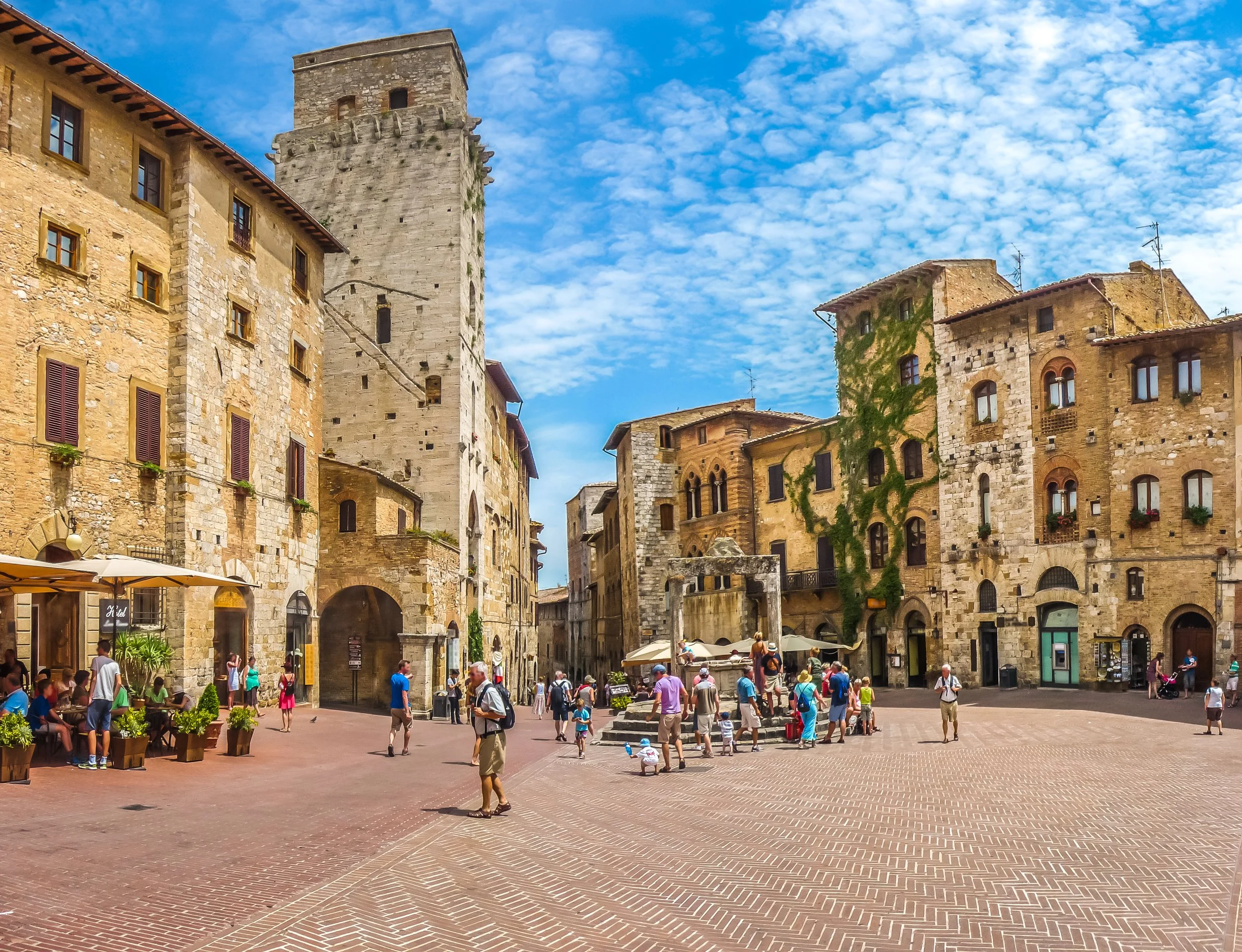
Piazza della Cisterna in San Gimignano, featuring the historic central well
IV.
Behind the Scenes
Our accommodation was tucked in an original historic dwelling. From a small window overlooking the surrounding valleys, we watched the storm slowly recede. Exposed wooden beams and terracotta-tiled floor give the space a warm atmosphere. It’s no coincidence that this scenically striking village has drawn filmmakers for decades. Among the many productions shot here, the one that brought us here was Franco Zeffirelli’s Tea with Mussolini.
It tells the story — partly autobiographical — of a young Italian boy who, through the local community of English women, discovers the beauty of poetry and music, as opposed to the tragic realities of war. In the 1990s, the streets of San Gimignano were graced by none other than Maggie Smith, Judi Dench, Joan Plowright, and Cher, whose memories of the “behind the scenes” moments still linger among the village’s historic characters. Someone still smiles at the memory of the day the square was covered in flour to simulate the dust of an explosion. The charming Hotel Cisterna, where several scenes were filmed, is still in operation, continuing to welcome lovers of art and culture. And just like that, the air seems to carry a hint of the cast’s delight over a cone of iconic Italian gelato.
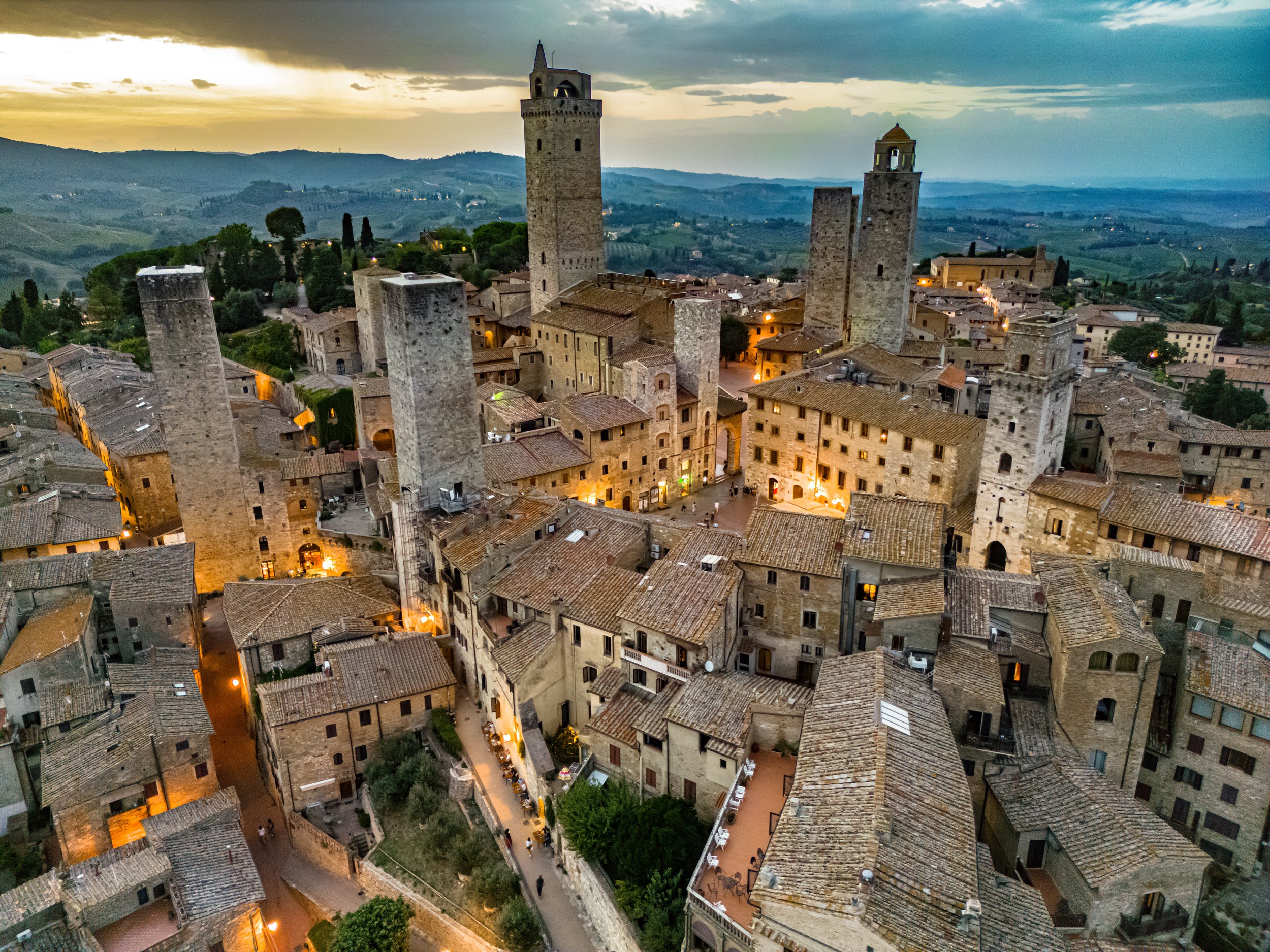
Aerial view of San Gimignano at sunset, with the village lights illuminating its medieval towers